By: Anna Wiles, RID, Senior Interior Designer
For years, workplace design chased openness — fewer walls, larger benching and more informal collaboration space. But workplace design is shifting. Employees learned just how productive they could be when there were fewer interruptions and greater control over their work environments during the work-from-home years. At the same time, many organizations experienced a decline in organic knowledge sharing, mentorship and the day-to-day training that happens when teams are physically together. Now, privacy and focus are becoming top priorities for employees while collaboration remains a key reason people come into the office at all.
“As hybrid work has taken over, people expect more control over how they work when they’re in the office,” says Anna Wiles, RID, Senior Interior Designer at S. Tipton Studio. “Clients are requesting more private rooms with improved acoustics where staff can collaborate without negatively impacting their nearby coworkers.”
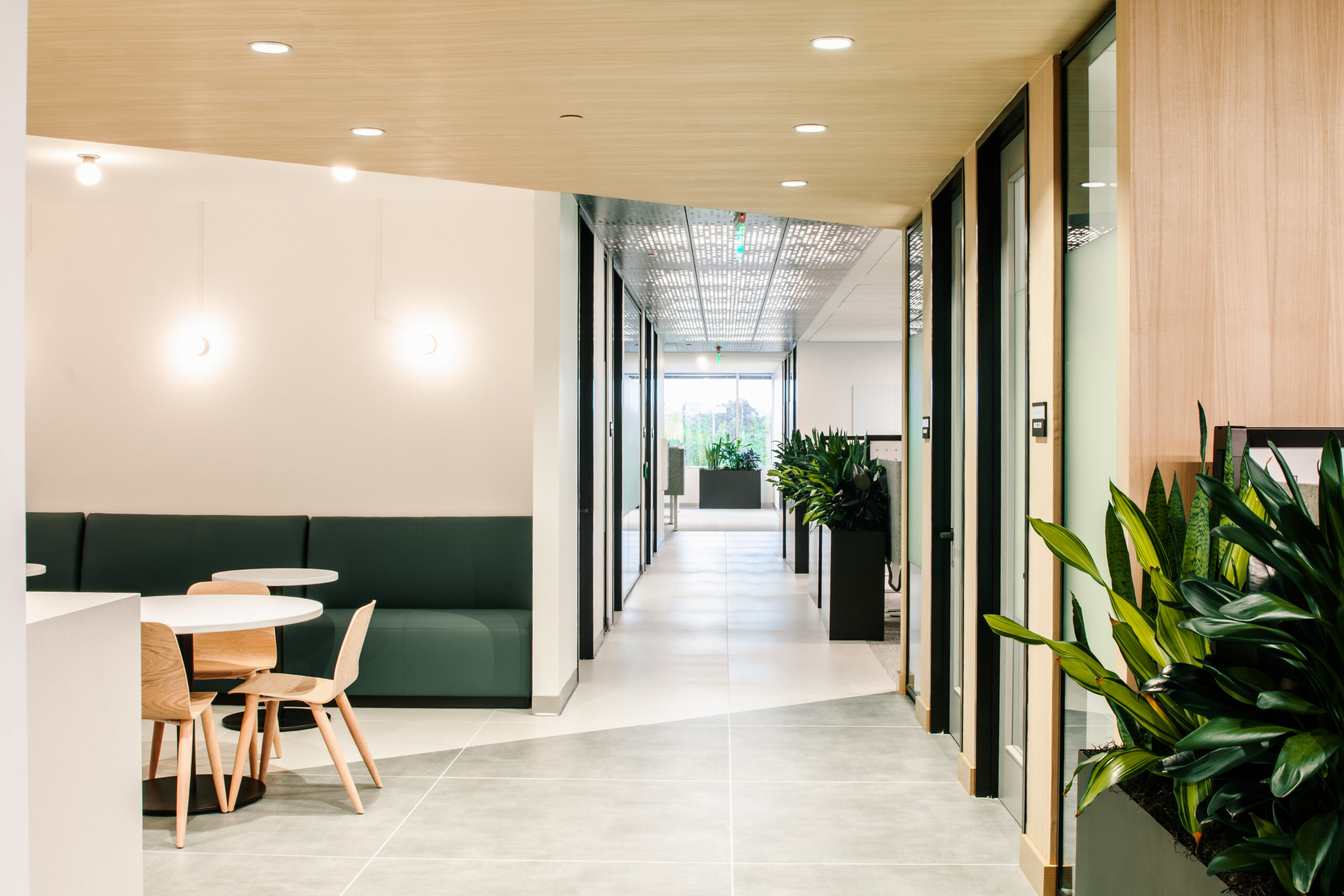
All of this means going beyond layout in the design process. Landlords should consider walls that extend all the way to the deck instead of stopping at the ceiling grid. Double-interior glazing systems improve sound control over traditional single-glazed aluminum office fronts. Behind the walls, small details like putty pads at outlets, sound boots in the ductwork and upgraded door seals help limit noise transfer between spaces. Most people wouldn’t notice all of these upgrades, but everyone benefits from them.
These upgrades can add cost, but they’re also difficult and expensive to add after a tenant moves in. The balance is shifting from limiting initial cost toward valuing upgraded performance.
“It’s a lot cheaper to address acoustics upfront,” says Wiles. “Once people are in the space and struggling to focus or have private conversations, it’s too late.”
Other changes to the office include upgrades to phone and huddle rooms. Clients are looking for these meeting spaces to perform equally well for in-person and remote participants, with careful attention to lighting, acoustics and technology design.
So, the result isn’t a return to completely closed-off offices or all open areas. It’s a more intentional, performance-driven workplace designed to provide connection without distraction.
Have a space coming to market or a tenant build-out ahead? Start the conversation with our team.